

A cold shower, a spreading ceiling stain, or a front door that won't lock can make you want to call 311 right away. Still, the strongest complaint usually starts before the phone call.
If you collect facts first, your report is easier to understand and harder to brush aside. That matters for no heat, leaks, mold, pests, bed bugs, broken locks, and other unsafe conditions.
A little prep can turn a vague complaint into a clear record.
Know when 311 is the right next step
Before calling 311, tenants should know what the city is likely to handle. In many places, 311 is for housing code, health, sanitation, and maintenance complaints. It isn't the right first call for an active fire, violence, or a gas emergency.
If the danger is immediate, call emergency services or the utility first. A sparking outlet, a strong gas smell, or a collapsed ceiling needs a faster response than a standard service complaint.
For most repair issues, it's smart to notify your landlord, super, or management in writing before you report it. That could be a text, email, portal message, or letter. Your message creates a time stamp, and it shows you gave the building a chance to fix the problem.
In New York City, NYC311's apartment maintenance complaint page lists common repair complaints and notes that some reports require your contact information. HPD's maintenance issue page also explains how housing complaints move through the city system.
If you live outside NYC, don't assume the process works the same way. Some cities send housing inspectors. Others route complaints to health, code, or building departments. Tenant protections also vary by city and state, so local rules matter.
At this stage, your goal is simple. Know the problem, report it to the building first when you can, and gather enough detail so 311 gets a clean, usable complaint.
Build a complaint file before you pick up the phone
A good complaint file doesn't need fancy tools. A notes app, a folder on your phone, and screenshots of messages are often enough.
Start with the apartment basics. Write down the full address, apartment number, floor, and the exact spot where the problem is happening. "Leak in bathroom" is weaker than "leak above the shower in Apt 5C, rear bathroom, near the light fixture."
Then build a timeline. Record the first day you noticed the issue, the dates it got worse, and every time you contacted management. If someone came to inspect or patch the problem, add that too. A short timeline is easier to follow than a messy pile of photos.
Your basic complaint file should include:
- Your full address, apartment number, and the room or area affected.
- The date the problem started, plus the dates it changed or got worse.
- Copies of texts, emails, portal messages, or letters sent to the building.
- Names of anyone who visited, inspected, or promised a repair.
- Photos or short videos that show the condition clearly.
- Notes about repair attempts, missed appointments, or recurring problems.
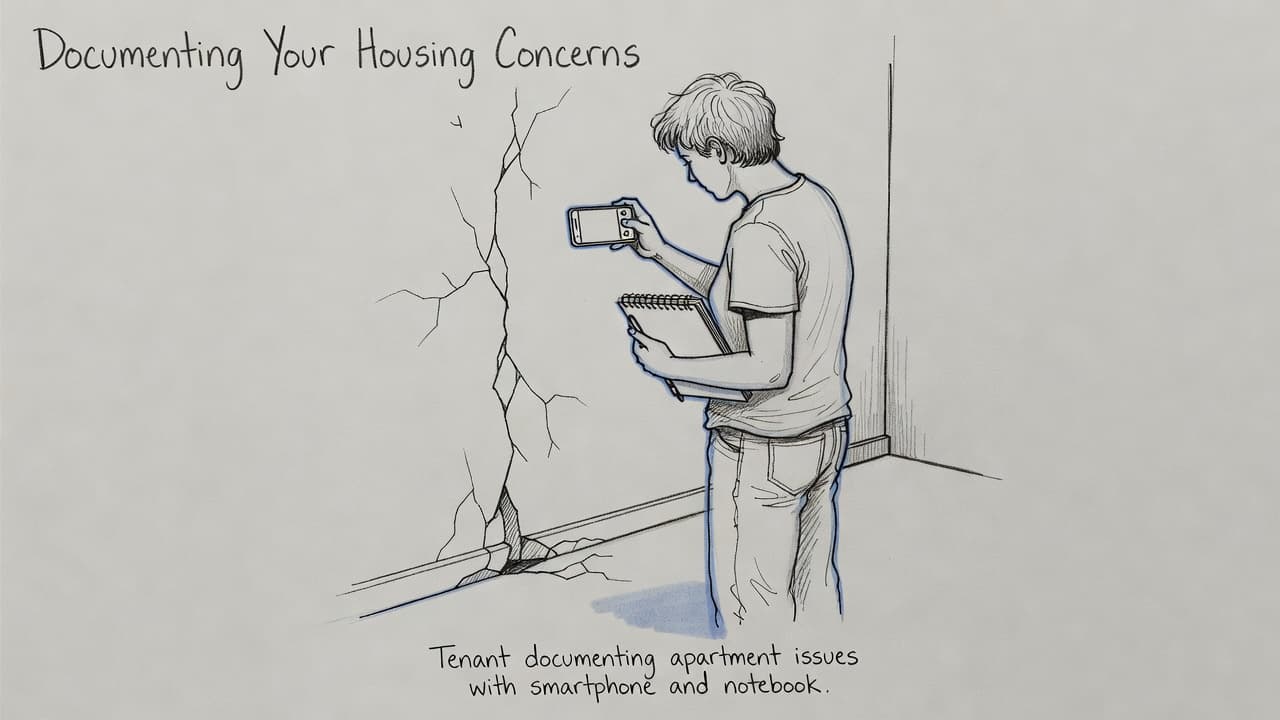
Photos help most when they tell a story. Take one close shot, one wider shot, and another from a few days later if the problem is ongoing. If the issue involves water, heat, or pests, date-stamped notes matter as much as the images.
For example, if your hot water cuts out every morning, log the date, time, and how long the water stayed cold or lukewarm. If a leak only appears during rain, note the weather and when the dripping starts. Those small details give your complaint weight.
Match your evidence to the housing problem
Different complaints need different proof. A broken lock is not documented the same way as mold behind a dresser, and a bed bug problem needs more than a blurry photo on a sheet.
This quick guide can help you collect the right details before you report the issue.
| Complaint | What to gather | Helpful details to mention |
|---|---|---|
| Heat | Room temperature notes, photos of a thermometer if you have one, dates and times | Which rooms are cold, whether heat drops at certain hours, and when you notified the building |
| Hot water | Short video of the faucet running, notes on time and duration | Whether the issue affects the shower, sink, or whole unit |
| Leaks | Photos over time, buckets or towels used, damaged ceiling or wall areas | When the leak starts, whether rain triggers it, and if water reaches lights or outlets |
| Mold | Close and wide photos, notes on damp areas, repeat growth after cleaning | Exact location, size, smell, and the moisture source if you know it |
| Pests, including bed bugs | Clear photos when possible, dates seen, where they were found, notes on droppings, cast skins, or bites after sleep | Bedroom or kitchen location, whether the issue is ongoing, and whether common areas also show signs |
| Broken locks | Photos or video of the lock, door, frame, or buzzer issue | Whether the apartment, building entrance, or window lock won't secure |
| Unsafe conditions | Photos of exposed wires, loose railings, broken stairs, cracked ceilings, missing detectors, or other hazards | Why the condition is unsafe and whether anyone has already been hurt or blocked from using the space |
The best evidence is plain and direct. Don't edit photos heavily, and don't write long captions on every image. Save the original file if you can.
Pest complaints deserve extra care because they can sound vague if the record is thin. For mice or roaches, note where you saw them and how often. For bed bugs, log where you found signs, such as mattress seams, bed frames, baseboards, or upholstered furniture. If you caught a bug safely, keep the photo and note the date and room.
Mold complaints also get stronger when you connect the mold to moisture. If the wall turns dark every time the upstairs unit leaks, say that. If the same patch comes back after painting, include that too.
If you want a plain-language NYC example of how complaint records can help, JustFix's guide to calling 311 is a helpful reference.
Make the report short, factual, and easy to inspect
When you finally make the call, think like an inspector. The city needs a location, a condition, a timeline, and a basic record of who was told.
Keep emotion out of the description, even if you're fed up. Anger is understandable, but facts travel farther. "There is mold on the bedroom wall behind the dresser, first reported on April 8, and it has spread about two feet" is stronger than "my landlord never fixes anything."
A simple script can keep you on track:
"I live at 123 Main Street, Apt 4B. The kitchen ceiling has leaked since May 18. Water drips during rain, mold is forming near the cabinet, and I notified management by text on May 18 and May 21. No repair has been completed."
For tenants calling 311, a short, clear description often works better than a long speech. Include access details if they matter, such as a buzzer name, entrance door, or the best phone number for an inspector to reach you.
After the call, keep the paper trail going:
- Save the complaint number, date, time, and a summary of what was reported.
- Add new photos, new messages, and any inspection visits to the same file.
- Keep copies of notices, repair attempts, and follow-up complaints if the condition continues.
If the city tries to inspect and can't get into the unit, the complaint can stall. So keep your phone nearby, check voicemail, and watch for mail, texts, or building notices.
One more point matters. If a problem spreads from one room to another, or from a small leak to a collapsed section of plaster, update your record right away. A complaint file should show the problem as it exists now, not only how it looked on day one.
Conclusion
The strongest 311 complaint usually starts with a solid paper trail. Dates, photos, apartment details, and copies of messages give your report shape and make it easier for the city to act.
That matters whether you're dealing with no heat, mold, broken locks, or bed bugs that keep returning. When your record is clear and factual, you give yourself a better chance of getting the problem seen, logged, and addressed.